Savor living more intentionally in retirement”describes a mindset and approach to this stage of life that emphasizes purpose, presence, and meaningful choices rather than simply filling time. It means approaching your post‑career years with deliberate choices that align with your values, bring you joy, and deepen your sense of fulfillment. Instead of drifting through days or staying busy for the sake of it, you consciously shape your routines, relationships, and activities so they reflect what truly matters to you. It involves slowing down enough to appreciate everyday moments, nurturing meaningful connections, exploring interests with curiosity, and creating a balanced life that feels purposeful, grounded, and satisfying.

“Live more intentionally, savoring each moment rather than rushing through it.” Unknown
Retirement is often described as a destination, but in reality, it is a new landscape—one that invites a slower pace, deeper reflection, and a more intentional way of living. After decades shaped by schedules, responsibilities, and expectations, retirement offers something rare: the freedom to choose how each day unfolds. Savoring life in this stage is less about filling time and more about enriching it.
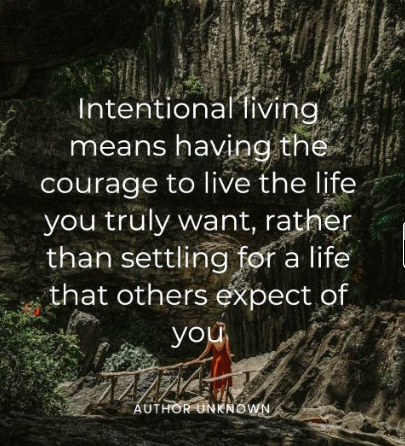
“How we spend our days is, of course, how we spend our lives.” Annie Dillard-This quote is often used in retirement contexts because it emphasizes choosing daily actions with intention.
Living intentionally in retirement begins with clarity. Many people step away from their careers only to discover that the absence of structure can feel disorienting. Intentional living restores a sense of purpose by encouraging retirees to ask meaningful questions: What brings me joy? What do I want to learn? How do I want to show up for the people I love? These questions act as a compass, guiding choices that align with personal values rather than external demands.

“You do not rise to the level of your goals. You fall to the level of your systems.” James Clear- A modern take on intentional living through habits and structure.
One of the most powerful ways to savor retirement is by embracing presence. Without the constant pressure to rush, retirees can finally give their full attention to the moment in front of them. A morning walk becomes an opportunity to notice the warmth of the sun or the rhythm of one’s breath. Preparing a meal becomes a creative act rather than a chore. Even simple routines—watering plants, reading a chapter of a book, calling a friend—take on new richness when approached with mindfulness. Presence transforms ordinary experiences into sources of quiet joy.
“Between stimulus and response there is a space. In that space is our power to choose our response.” Victor E. Frankl- A powerful reflection on conscious choice.
Intentional living also invites exploration. Retirement is not an ending but a beginning, offering space to rediscover passions that were set aside during busier years. Some people take up painting or gardening; others learn a new language, volunteer, or travel. What matters is not the activity itself but the sense of curiosity it awakens. Trying something new keeps the mind engaged and the spirit energized, reminding retirees that growth does not stop with age.
“Daring to set boundaries is about having the courage to love ourselves.”
Brené Brown- Intentional living often requires choosing what aligns with your values.
Relationships play a central role in savoring this chapter as well. With more time available, retirees can invest in deeper connections—with partners, family, friends, and community. Intentional conversations, shared experiences, and acts of kindness strengthen bonds that may have been stretched thin during working years. These relationships provide emotional nourishment and a sense of belonging that enriches daily life.

“Connection is why we’re here; it is what gives purpose and meaning to our lives.” Brené Brown- A powerful insight into the role relationships play in human well‑being.
Finally, savoring retirement means embracing balance. It is easy to fall into extremes—overscheduling to stay busy or drifting aimlessly without direction. Intentional living finds the middle ground: enough structure to feel purposeful, enough freedom to feel spacious. This balance allows retirees to enjoy both rest and engagement, solitude and connection, reflection and adventure.
In the end, living more intentionally in retirement is about honoring time as a gift rather than something to fill. It is about choosing experiences that matter, nurturing relationships that uplift, and cultivating a mindset that finds meaning in the everyday. When approached with intention, retirement becomes not just a phase of life but a deeply satisfying way of being—one that invites savoring, gratitude, and a renewed sense of purpose.